Key Takeaways
- Pre-Storm Vigilance: Identifying structural weaknesses now can prevent catastrophic property damage during Missouri’s volatile storm season.
- Identify “V-Crotches: Narrow unions between trunks are prone to splitting under high wind loads.
- Watch the Ground: Soil heaving or fungal growth at the base suggests compromised root systems.
- Dieback Warning: A thinning canopy or dead branch tips often indicate a tree that can no longer support its own weight.
- Proactive Pruning: Reducing the “sail effect” by thinning the canopy allows wind to pass through rather than pushing the tree over.
Living in St. Joseph, Missouri, means being prepared for everything from sudden summer “derechos” to heavy winter ice storms that can coat the landscape in inches of frozen rain. For homeowners, the most significant threat to property during these events isn’t just the wind or ice-it is the trees that surround the home. While trees provide essential shade and aesthetic beauty, a weak or diseased tree is a liability waiting for a catalyst.
Storm preparation is a year-round responsibility. By the time the sirens wail or the ice begins to glaze the limbs, it is too late to take preventative action. Identifying weak trees before the clouds gather is the most effective way to protect your roof, your vehicles, and your family. Understanding the biology of tree failure and learning to spot the subtle warning signs is essential for any property owner in Northwest Missouri.
The Anatomy of a Hazardous Tree
A tree does not have to be dead to be dangerous. In fact, many trees that appear green and vibrant in the spring are structurally compromised from the inside out. Trees are complex organisms that manage massive amounts of weight and tension. When internal decay or structural defects exist, the tree loses its ability to flex and adapt to environmental stressors. Piling the weight of Missouri ice onto an already weakened structure is what leads to the catastrophic failures seen during our local storm seasons.
To protect your property, you must look beyond the green leaves and evaluate the “skeleton” of your trees. A proactive inspection can save you thousands of dollars in deductible costs and structural repairs.
The 4 Main Warning Signs of Tree Weakness
To understand why a tree might fail, we have to look for specific structural defects that act as “breaking points” during high winds or heavy ice accumulation.
1. Tight “V” Unions and Included Bark
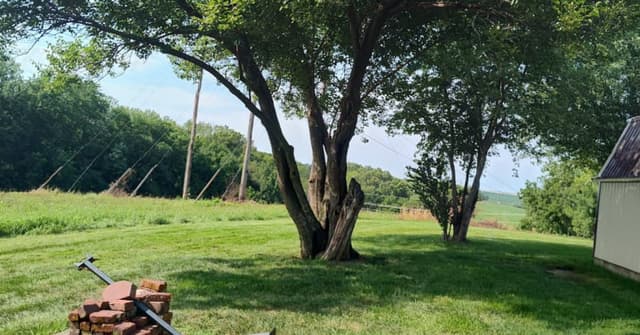
Trees with two or more main trunks of similar size are common, but the shape of the junction where they meet is critical. A wide “U” shape is generally strong because the tree has been able to bridge the wood fibers together. However, a tight “V” shape creates “included bark,” where the bark grows inward between the stems rather than joining them. During high winds, these trunks act like a lever, pushing against each other until the tree literally splits in half.
2. Cavities and Internal Decay
Visible holes in the trunk or large areas of missing bark are signs that the tree’s “skeleton” is weakening. When heartwood, the structural center of the tree, is compromised by rot, the tree loses its ability to support its own vertical weight. These cavities often hide behind ivy or are tucked into the base, making them easy to miss. If you see woodpeckers frequently visiting a specific spot, they may be hunting insects that live in that decayed wood.
3. Root Zone Failures (The Anchor)
The trees’ health starts underground. If the roots are compromised, the entire tree can fail, regardless of how healthy the top looks. Mushrooms or “conks” growing at the base of the trunk or along the surface roots are signs of root rot. Furthermore, if you notice soil “heaving” or mounding on one side of a leaning tree after a rain, it indicates that the root system is physically pulling out of the ground. This tree is no longer anchored and is a high-risk hazard.
4. Deadwood and Canopy Dieback
Dead branches are the most common projectiles during a storm. If the top of your tree (the crown) looks thin or has large branches with no leaves during the growing season, the tree is in decline. These “widow-makers” can snap at any time, even without extreme weather, posing a constant risk to anything beneath them.
Species-Specific Risks in Northwest Missouri
In St. Joseph, our urban forest contains several species that require more frequent monitoring due to their growth habits:
- Silver Maples: Fast-growing but with brittle wood, these are the primary victims of ice storms.
- Bradford Pears: Known for their beautiful spring blooms, they are notorious for splitting at the “V” union as they reach maturity.
- Ash Trees: With the Emerald Ash Borer moving through Missouri, many Ash trees are “zombie trees”-they appear standing but are structurally hollow and brittle.
Proactive Maintenance: The Best Storm Insurance
Preparation isn’t just about removing trees; it’s about making them stronger. Structural pruning is a critical service that helps trees survive high winds. By thinning the interior branches, you reduce the “sail effect.” Instead of the canopy catching the wind like a giant umbrella, which puts immense pressure on the trunk, the wind passes through the branches.
Additionally, “crown reduction” can help lower the center of gravity on a top-heavy tree, making it less likely to topple during the saturated soil conditions common in Missouri springs.
Keep Your Property Safe with Hoffman Tree Service
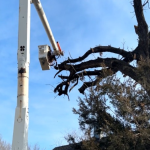
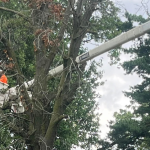
When it comes to protecting your property, Hoffman Tree Service is the name St. Joseph trusts. With over 10 years of experience, our BBB A-rated team provides expert tree trimming, pruning, and safe removals using advanced bucket truck services. Whether you need preventative care or 24/7 emergency support after a storm, we deliver reliable, honest workmanship to keep your home safe year-round.
Frequently Asked Questions
1. Can a tree be saved if it has a large trunk crack?
It depends on the depth and orientation of the crack. Some trees can be stabilized with professional cabling and bracing to support the weight, while others are too far gone and must be removed to prevent an accidental fall on your home.
2. How often should I have my trees inspected for storm readiness?
A professional assessment is recommended every 2 to 3 years, or immediately following any major weather event in Northwest Missouri. Early detection of rot or cracks can save the tree and your property.
3. Does ice do more damage than wind in St. Joseph?
In Missouri, ice is particularly dangerous because it adds thousands of pounds of weight to brittle species like Silver Maples. This causes branches to “shatter,” leading to widespread power outages and roof damage.
4. What are “zombie trees”?
These are trees that look alive but are structurally hollow or brittle, often due to pests like the Emerald Ash Borer. They are highly prone to snapping at the base without warning during even moderate winds.
5. Will insurance cover a tree falling if it was already dead?
Generally, insurance covers “sudden and accidental” events. If an adjuster determines the tree fell due to pre-existing rot or neglect that was visible before the storm, your claim could be denied.
6. Can pruning actually prevent a tree from uprooting?
Yes. By thinning the branches, you reduce the wind resistance (the sail effect), which puts significantly less strain on the root system during high-velocity wind events.
7. Should I cut down a leaning tree?
Not always. Many trees grow with a natural lean toward sunlight. However, if the lean is new or if the soil is lifting at the base, it is a critical hazard that needs immediate attention.
8. What is the safest distance for a tree from my house?
Ideally, a tree should be far enough away that its mature height wouldn’t reach your roof. However, regular maintenance and structural pruning can make trees closer to the home significantly safer.
Summary Checklist: St. Joseph Storm Preparation
| Condition | Risk Level | Recommended Action |
| “V-Shaped” Trunk Unions | High | Inspect for “included bark” and assess for cabling or removal. |
| Trunk Cavities/Hollows | Moderate to High | Determine if the “shell” of the tree can still support its weight. |
| Soil Heaving at Base | Critical | Evacuate the fall zone; call for emergency removal immediately. |
| Brittle “Zombie” Ash Trees | High | Remove before the Emerald Ash Borer damage leads to a collapse. |
| Overextended Canopy | Moderate | Perform structural pruning to reduce the “sail effect” before storms. |
Final Advice
If you notice any of these warning signs, do not wait for a storm to force the issue. A professional assessment from an arborist can determine if the tree can be saved through specialized care or if it must be removed to protect your property. For expert service in the St. Joseph area, visit Hoffman Tree Service.
Author Bio: Hoffman Tree Service Editorial Team
The team at Hoffman Tree Service has over a decade of experience managing property safety and tree health in Saint Joseph, MO. We specialize in hazard mitigation, tree removal, and expert construction services for both residential and commercial clients.